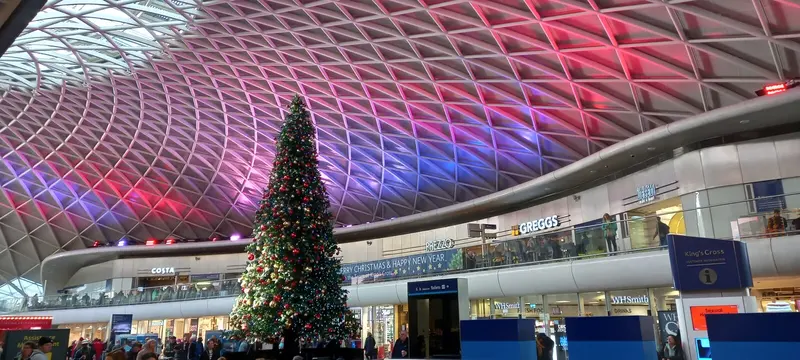
Going by train is often the easiest way to reach a big city Christmas market: no hunting for a parking space, and you can have a mulled wine. Most of December is a normal timetable, but the days around Christmas and New Year are very different, and this year National Rail has published a list of engineering works that will affect some of the busiest routes. Here is what its festive travel guide says.
The days that are different
National Rail’s guide covers Christmas Eve (Thursday 24 December 2026) to Monday 4 January 2027.
- Christmas Eve: trains on many routes finish earlier than normal. National Rail publishes a list of last direct trains from London.
- Christmas Day (Friday 25 December): there are no National Rail services, as usual.
- Boxing Day (Saturday 26 December): most operators run no trains. Chiltern Railways, Merseyrail, London Overground, ScotRail, Southern and Stansted Express run limited services on some routes.
- Monday 28 December (the substitute bank holiday): trains run — check the Journey Planner.
- New Year’s Eve: some routes finish earlier than normal.
If you are visiting one of the markets that stay open after Christmas — see our guide to markets open on Christmas Eve and after Christmas — remember that getting there on Boxing Day is likely to mean driving or a very limited service.
Engineering works to plan around
National Rail lists these major works over the festive period:
- Birmingham New Street: no trains from 24 to 28 December inclusive.
- London Paddington: major disruption from 27 December to 3 January inclusive, because of work at Dolphin Junction.
- London Liverpool Street to Shenfield: no Greater Anglia trains from 27 December to 3 January inclusive, and Elizabeth line services are affected.
- London Waterloo: a reduced timetable on 27 and 28 December, because of work in the Wimbledon area.
- Other works at Doncaster (24 December), London Charing Cross (27–28 December and 1–3 January), Redhill (20 December to 3 January), Northampton (27–31 December) and Huddersfield (from 27 December to the end of January).
Some of these routes serve big market cities, including Birmingham, Bath, Bristol, Cardiff and Huddersfield. If your trip falls in these dates, check whether a replacement bus or a different route is involved.
Before you book
1. Check, then check again. National Rail says timetables for the festive period are still being finalised and journey information may change, so look again a few days before you travel and on the day.
2. Book a seat where you can. National Rail advises reserving seats for the festive dates.
3. Book Passenger Assist in advance if you need help at stations.
4. Know your rights. National Rail says that if your train is cancelled or delayed, you may be entitled to a refund or compensation.
Planning the market side
- Check the market’s own closing time against the last train home, especially on Sundays and Christmas Eve.
- Saturday afternoons in December are busy on trains into the big market cities as well as at the markets themselves. A weekday or an earlier start is calmer — see our first-time tips.
- Look at the last train before you go, not after. On Christmas Eve and New Year’s Eve, services on some routes finish early, so a late visit can leave you stuck.
- Think about what you’ll carry. Bulky gifts and glass decorations are awkward on a crowded train.
- Staying over? Our guide to Christmas market weekend breaks covers choosing a city and pacing the trip.
To see what’s trading on the day you plan to travel, use the what’s open page, or the season planner for the whole of December.
Sources
Checked 23 November 2026. Dates and opening times can change, so check with the organiser before you travel.
Dates and details come from each market’s organiser and can change at short notice — check the market’s page, and the organiser’s own site, before you travel. Spotted a mistake? Tell us.